
Indoor air. Human well-being.
Visualizing
the invisible.
The air around us is part of every guest experience, every workday, and every night’s rest. We make indoor air quality visible through field research and practical consulting.
One mission. Two complementary paths.
Evidence that informs.
Insight that helps.
Research helps us understand indoor environments as people actually experience them. Consulting translates those observations into priorities that owners and operators can act on.
Understand your indoor air.
For hotels, restaurants, and other indoor venues seeking a clearer picture of their air quality and a practical basis for improvement.
- On-site monitoring and assessment planning
- Interpretation of CO₂, particulate matter, and comfort conditions
- Clear reports and recommendations for operational review
- Guest and employee communication grounded in evidence
Discover what measurements reveal.
Real-world investigations of indoor air in hospitality, travel, and everyday settings—connecting environmental measurements with the experience of occupants.
- Hotel guestrooms and overnight conditions
- Restaurants and cooking-related particles
- Aircraft, cruise cabins, and shared spaces
- Dental environments and occupied workplaces
Research in the real world
Ordinary places.
Overlooked questions.
Field monitoring follows the rhythms of real spaces: sleeping, dining, traveling, and working. The aim is to make patterns visible and ask better questions about indoor air.
01 / Stay & sleep
Beyond the room’s appearance.
Hotel guestrooms and cruise cabins provide settings for examining overnight CO₂, occupancy, and ventilation-related patterns.
02 / Dine & gather
What happens when a room fills?
Restaurant and event-space monitoring explores how cooking, activities, and occupancy relate to particles and CO₂.
03 / Travel & everyday life
Air quality along the way.
Aircraft cabins, cinemas, and dental environments expand the inquiry to places where people spend time together.
Clean and fresh air for quality sleep
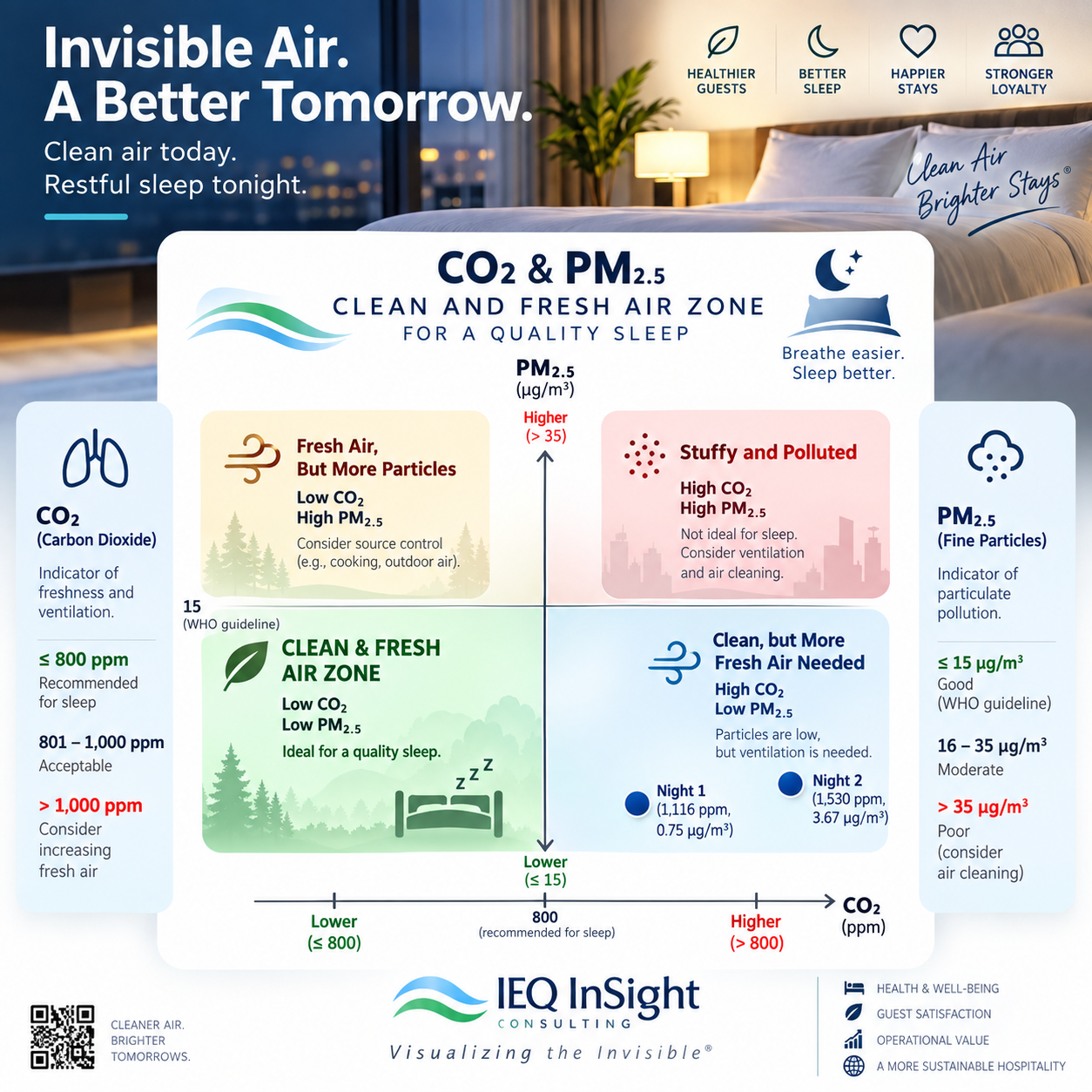
Research themes shown here describe areas of field investigation. Findings depend on the location, monitoring period, occupancy, and instruments used; individual measurements do not establish health outcomes.
From observation to action
A clearer picture. A practical next step.
Start with the space.
Define the question, select suitable instruments, and document activities and occupancy alongside the measurements.
Make patterns understandable.
Examine changes over time and explain relevant reference values with their averaging periods and limitations.
Support better decisions.
Identify priorities for operational or engineering review, communicate findings clearly, and plan follow-up monitoring where useful.
The researcher behind InSight
Dr. Howook
“Sean” Chang
FOUNDER & PRINCIPAL · DBA
My work explores a simple question: what can we learn about the spaces we use every day when we measure the air inside them?
With a background in hospitality management and field research on indoor air quality, I connect environmental measurements with the experiences of guests, employees, and other occupants.
IEQ InSight brings that perspective to research and consulting, helping make clean, fresh indoor air a visible part of the conversation about hospitality and well-being.
Consulting & collaboration
Better questions.
Better indoor environments.
Whether you operate a venue or investigate the built environment, there is a place to begin: understanding the air people share.